How to Choose Yarn for Sweater Knitting: A Practical Guide for Buyers
Choosing yarn for sweater knitting is not only about color or price. The right yarn affects the hand feel, fabric weight, warmth, elasticity, appearance, production stability and final wearing experience of the garment.
For sweater factories, garment brands and yarn distributors, a good yarn choice can make sampling faster, production smoother and the finished sweater more attractive to customers. Before placing a bulk order, buyers should consider material, yarn count, season, texture, color effect and application.
1. Choose Yarn by Sweater Season
Different seasons need different yarn performance.
For autumn and winter sweaters, buyers usually prefer yarns with a warm, soft or fluffy hand feel. Wool yarn, wool blended yarn, bulk acrylic yarn, brushed yarn, moss yarn, feather yarn, chenille yarn and boucle yarn are common choices. These yarns help create a thicker look and comfortable touch.
For spring and summer knitwear, lighter and breathable yarns are more suitable. Cotton yarn, linen cotton yarn, bamboo cotton yarn, rayon yarn, viscose blended yarn and high twist yarn are often used for lightweight sweaters, cardigans, tops and breathable knitted garments.
If the target market needs year-round knitwear, blended yarn can be a practical choice. It can balance comfort, cost, strength and fabric appearance.
2. Choose Yarn by Material
Material is one of the most important factors when choosing sweater yarn.
Acrylic yarn is widely used for sweater knitting because it is colorful, stable and cost-effective. Solid acrylic yarn has a cotton-like hand feel, while bulk acrylic yarn has a warmer and more wool-like touch.
Wool yarn and wool blended yarn are suitable for warm sweaters, winter knitwear and premium garments. Blending wool with acrylic, nylon or other fibers can improve strength, reduce cost and adjust the hand feel.
Cotton yarn is soft, breathable and comfortable for casual knitwear. It is often used for spring and summer sweaters, children’s knitwear and skin-friendly garments.
Viscose, rayon, bamboo and modal blended yarns are often chosen when buyers need a smooth touch, good drape and bright color effect.
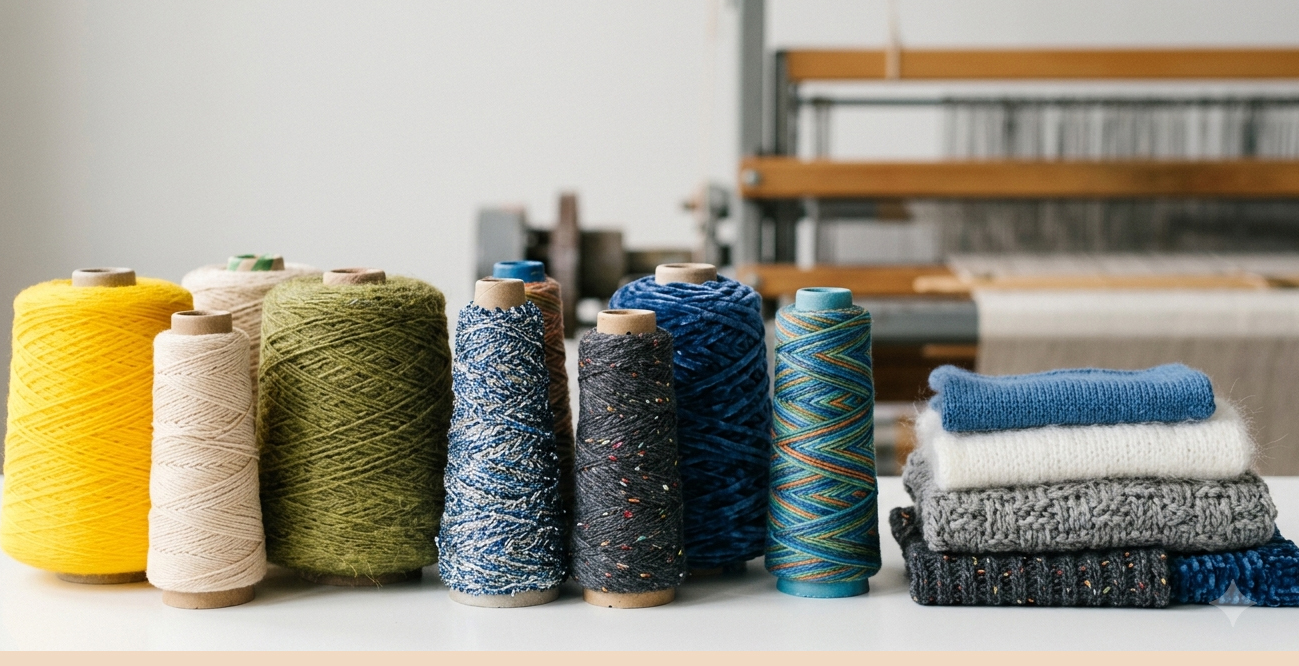
Fancy yarns such as nep yarn, slub yarn, boucle yarn, chenille yarn, feather yarn and space dyed yarn are used when the sweater needs special texture, color variation or fashion appearance.
3. Choose Yarn by Yarn Count
Yarn count affects fabric thickness, weight and knitting performance.
Finer yarn counts are suitable for lightweight sweaters, fine gauge knitting and smooth fabric surfaces. Medium counts are often used for regular sweaters, cardigans and knitwear with balanced thickness. Coarser yarn counts are better for chunky sweaters, winter styles and textured knitwear.
Before confirming the yarn count, buyers should consider the knitting machine gauge, target fabric weight, garment style and sample effect. The same material can show very different results when the count changes.
4. Choose Yarn by Hand Feel and Fabric Effect
Buyers should not only ask what the yarn is made of. They should also confirm what the finished fabric should feel like.
Some sweater styles need a soft and smooth touch. Some need a fluffy and warm surface. Some need a dry, breathable and natural hand feel. Others need visible texture, color knots, loops or brushed effects.
For example, moss yarn and brushed yarn can create a soft and fuzzy surface. Nep yarn gives a colorful speckled effect. Slub yarn adds irregular texture. Space dyed yarn creates multi-color sections. Chenille yarn gives a thick, plush and soft touch.
The clearer the required fabric effect, the easier it is for the supplier to recommend the right yarn.
5. Choose Yarn by Color and Style
Color is very important for sweater products. Buyers can choose solid dyed yarn, melange yarn, colored spun yarn, space dyed yarn, multi-color nep yarn or customized color matching.
For basic sweater collections, solid colors are easy to match and produce. For fashion collections, space dyed yarn, nep yarn, boucle yarn and other fancy yarns can make the garment more distinctive.
When requesting custom colors, buyers should provide Pantone number, physical color sample or reference fabric. This helps reduce color difference during sample development and bulk production.
6. What Buyers Should Confirm Before Ordering
Before asking for a quotation, buyers can prepare the following information:
Yarn type and material composition
Yarn count or target fabric thickness
Color requirement or Pantone number
Knitting machine gauge
Application, such as sweater, cardigan, scarf, hat or socks
Required hand feel and fabric effect
Sample quantity and bulk order quantity
MOQ, target price and delivery time
Packaging and shipping requirements
Clear information helps the supplier recommend a more accurate yarn solution and provide a faster quotation.
7. How Promise Textile Supports Sweater Yarn Buyers
Promise Textile supplies knitting yarn, fancy yarn, blended yarn, acrylic yarn, cotton yarn, wool blended yarn and customized yarn for sweater factories, garment brands, fabric mills and yarn distributors.
We support yarn count selection, material matching, custom color development, sample production and bulk yarn supply. If you are developing a new sweater collection, you can send us your yarn type, count, color, quantity and application. Our team will help recommend suitable yarn options for your project.
Post time: Jul-09-2026